

Chronic Kidney Disease (CKD) is a long-term condition in which the kidneys gradually lose their ability to filter waste and extra fluid from the blood. Diabetes is the leading cause of CKD. When kidney function falls, medicines and doses that were once safe may need to be changed. This article explains what CKD is, how it is staged, which medicines are safe or need dose changes, and simple steps patients can follow to protect their kidneys.
Why CKD Matters
CKD affects many parts of the body — from how medicines are cleared, to heart health, to fluid balance.
Changes how medicines clear
It can change how medicines are cleared from the body, so doses may need adjusting.
Raises heart disease risk
CKD increases the risk of heart disease and cardiovascular complications.
Disrupts fluid & electrolytes
It can cause fluid retention and electrolyte imbalances that need monitoring.
Slowed by good control
Controlling blood sugar, blood pressure, and cholesterol helps slow CKD's progress.
CKD Stages (Based on eGFR)
Estimated Glomerular Filtration Rate (eGFR) shows how well the kidneys filter blood. CKD stages help doctors decide treatment and medicine changes.
| Stage | eGFR (mL/min/1.73m²) | Description |
|---|---|---|
| G1 | ≥ 90 | Normal or high |
| G2 | 60 – 89 | Mildly decreased |
| G3a | 45 – 59 | Mild to moderate decrease |
| G3b | 30 – 44 | Moderate to severe decrease |
| G4 | 15 – 29 | Severe decrease |
| G5 | < 15 | Kidney failure (may need dialysis) |
Key Points to Remember
- Control blood sugar, blood pressure, and lipids to slow CKD progression.
- Use SGLT2 inhibitors and ACE inhibitors or ARBs for kidney protection when indicated.
- Monitor kidney function (eGFR) and urine albumin regularly.
- Avoid nephrotoxic drugs such as NSAIDs, some contrast agents, and certain antibiotics when possible.
- Ensure adequate hydration and follow a healthy lifestyle.
- Get recommended vaccines: Hepatitis B, Influenza, and Pneumococcal.
- Refer early to a nephrologist if eGFR falls below 30 or there is rapid decline in kidney function.
Medicines and Dose Guidance for Patients with CKD
Commonly used diabetes and related medicines, with simple guidance about dose changes and safety in different stages of CKD. Always follow your doctor's advice — this table is a guide, not a prescription.
| Drug / Class | Typical Dose | Dose by eGFR or Safety Notes |
|---|---|---|
| Metformin | 500 mg twice daily (max 2 g/day) | Full dose if eGFR ≥ 60. Reduce to max 1 g/day if eGFR 30–44. Avoid if eGFR < 30 (risk of lactic acidosis). |
| SGLT2 inhibitors e.g., Empagliflozin |
10 mg once daily (example) | Kidney & heart protective — continue where indicated and tolerated. Some products have eGFR limits — follow doctor's guidance. |
| GLP-1 receptor agonists e.g., Semaglutide |
Dose per product | No adjustment needed for most agents; generally safe even in low eGFR and provide cardio-renal benefits. |
| DPP-4 inhibitors e.g., Sitagliptin, Linagliptin |
Sitagliptin 100 mg once daily | Dose-dependent — Sitagliptin: reduce if eGFR < 60 (50 mg if 45–59; 25 mg if <45). Linagliptin usually needs no adjustment. |
| Sulfonylureas e.g., Glimepiride |
Glimepiride 1–4 mg once daily | Use with caution. Lower dose in CKD stage G3 and avoid in very advanced CKD due to risk of low blood sugar. |
| Insulin | Individualized | Often reduced in advanced CKD. Monitor blood sugar closely and adjust with doctor's help. |
| Thiazolidinediones Pioglitazone |
15–30 mg once daily | Usually no adjustment. Use carefully if you have fluid retention or heart failure. |
What to Continue, Adjust, or Avoid
Continue Without Dose ChangeDrugs to Continue Without Dose Change (Common Examples)
- ACE inhibitors or ARBs (e.g., Enalapril, Telmisartan) — start low and monitor potassium and creatinine.
- Statins (e.g., Atorvastatin) for cholesterol management.
- Low-dose aspirin when recommended by your doctor.
- Calcium channel blockers (e.g., Amlodipine).
- Beta blockers (e.g., Bisoprolol) when needed for heart conditions.
- Vitamin D and calcium supplements as prescribed.
- Allopurinol (for high uric acid) — dose may be adjusted in severe CKD.
Drugs That Often Need Dose Adjustment
Some drugs need dose changes or closer monitoring in CKD, including diuretics (may need higher or adjusted dosing), gabapentin or pregabalin (doses often reduced), many antibiotics (dosing depends on kidney function), and certain antihypertensive drugs.
Medicines to Avoid or Use with Caution
- NSAIDs (e.g., ibuprofen, naproxen) — avoid unless your doctor says otherwise; they can harm kidneys.
- Certain contrast dyes used in imaging — discuss with your doctor before tests.
- Some antibiotics that are filtered by the kidney — dose adjustments are often needed.
Sick Day Rules
If you become sick with vomiting, diarrhea, fever, or poor fluid intake, follow these steps to protect your kidneys.
⛔ Temporarily stop
- ACE inhibitors / ARBs
- Diuretics
- Metformin
- SGLT2 inhibitors
- NSAIDs
✅ Continue
- Insulin (may need dose changes)
- Other essential medicines as advised by your doctor
- Drink fluids if you can
- Monitor blood sugar & blood pressure closely
Contact your doctor if symptoms continue for more than 24 hours, or if you cannot keep fluids down.
Monitoring and Lifestyle Tips
Regular monitoring and small lifestyle changes can make a big difference in slowing CKD and keeping you healthier.
Monitoring Checklist
- eGFR and serum creatinine every 3–6 months (or as advised).
- Urine albumin-to-creatinine ratio (UACR) yearly or more often if abnormal.
- HbA1c (blood sugar control) every 3 months or per doctor's recommendation.
- Blood pressure check at each clinic visit.
Diet & Lifestyle
- Limit salt (aim for less than 5 g/day).
- Moderate protein intake (around 0.8 g/kg/day unless advised otherwise by a dietitian).
- Eat more fruits, vegetables, and whole grains; avoid processed foods high in salt.
- Quit smoking and limit alcohol use.
Vaccination and Preventive Care
Patients with CKD should receive recommended vaccines to prevent infections that can be severe.
Hepatitis B
Recommended for protection against liver infection risk.
Annual Influenza
Yearly flu vaccine as advised by your healthcare team.
Pneumococcal
Helps prevent severe pneumococcal infections.
When to See a Specialist (Nephrologist)
Quick Reference Guide
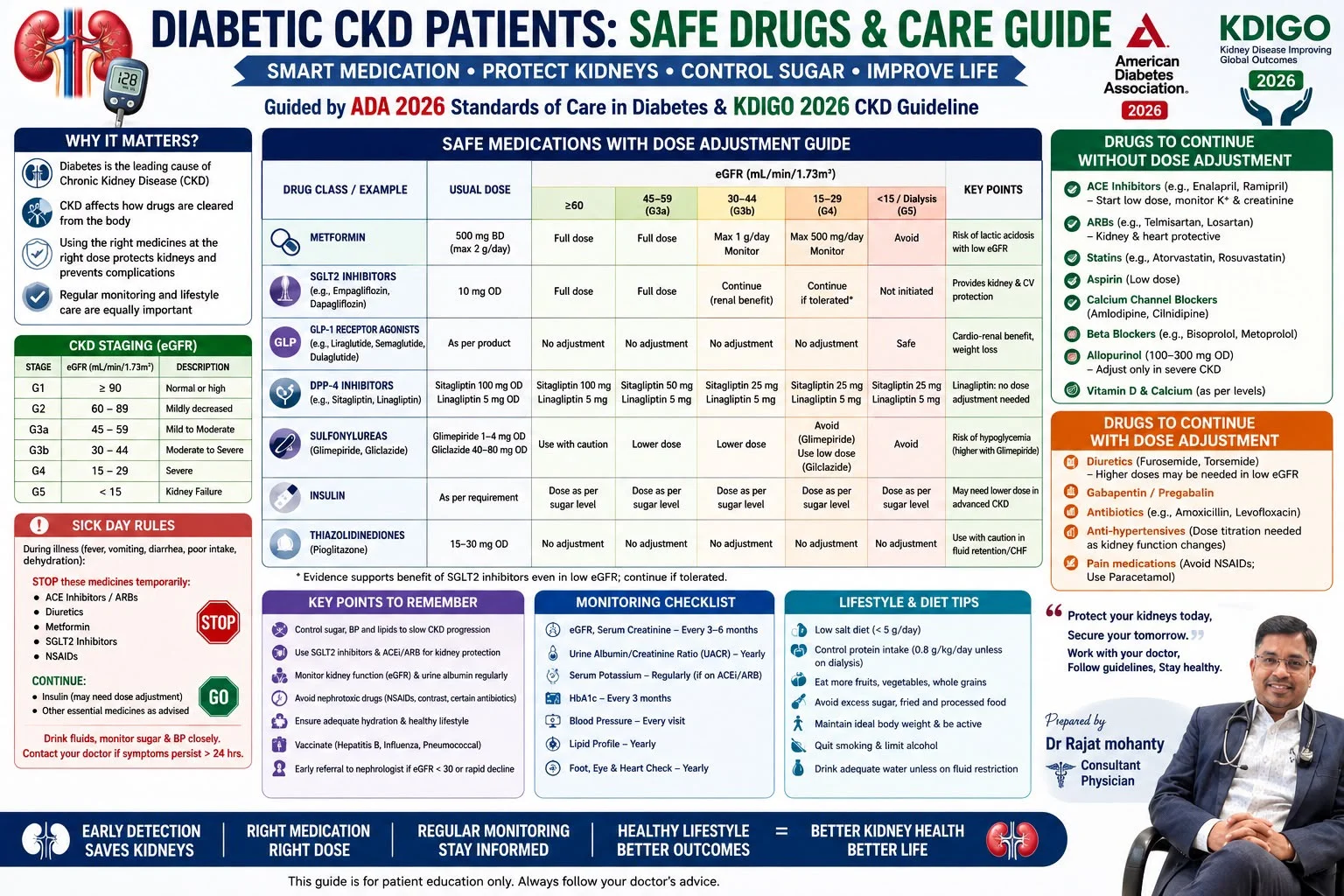
A one-page summary of everything above — save it or share it with family.

Simple Actions to Protect Your Kidneys
Six habits that make the biggest difference, in order of daily importance.
Keep blood sugar, blood pressure, and cholesterol under control.
Take medicines exactly as prescribed and ask about dose adjustments if kidney function changes.
Avoid over-the-counter painkillers like NSAIDs without doctor's advice.
Stay hydrated, eat a balanced low-salt diet, and follow lifestyle advice.
Get regular check-ups and screening tests (eGFR, UACR, HbA1c).
Get vaccinated as recommended.

Dr Rajat Mohanty
MBBS · MD (Internal Medicine) · FCCM · FID · PGPAHM (IIM & AIIMS Nagpur)
Senior Consultant in Internal Medicine, Critical Care, and Diabetology — a dedicated intensivist committed to ethical, evidence-based care delivered with empathy. Dr Mohanty focuses on preventing and treating complications of diabetes that can lead to CKD, helping patients choose the right medicines, adjust doses as kidney function changes, and follow simple lifestyle steps to protect the kidneys.
Protect your kidneys today: manage diabetes and blood pressure well, take medicines responsibly, and get regular tests. Early action helps secure a healthier tomorrow.